Frontline retail turnover runs about 60% a year, and replacing one of those workers costs roughly $7,000, per the 2025 Fountain Frontline Report. Across multiple stores, the costs repeat: the same seats reopen at every location, and each reopened role restarts the sourcing spend and the training hours while someone scrambles to cover the shifts.
Retailers shape retention before day one, through the job post, the offer timeline, the first schedule, and the first 90 days, long before a quarterly HR review can catch it. Automation can carry the screening, the paperwork chasing, and the check-in reminders. Managers make the hiring and retention calls.
What is employee retention in retail?
Employee retention in retail is the share of workers a retailer keeps over a given period. Employee turnover is the share it loses.
End-of-period headcount minus new hires, divided by starting headcount, times 100.
Run the retention formula by location each quarter rather than rebuilding the math by hand.
National numbers put store-level results in context. In 2025, retail trade separations tracked by the Bureau of Labor Statistics (BLS) Job Openings and Labor Turnover Survey (JOLTS) averaged 3.8% a month against 3.3% economy-wide. Annualized, that is 45.6% turnover for retail trade against 39.6% economy-wide.
That is our own arithmetic, not a BLS figure, and it runs high because a seat that turns over twice in a year counts twice.
The retail-trade average also blends frontline and corporate retail roles, so the most useful benchmark is your own trailing performance against comparable locations and roles. Track it by store and shift: a blended company-wide average hides the specific store and shift where the problem lives, and two locations under identical policies can produce sharply different retention.
Why retail employees actually leave
Retail workers leave when the job misses what they say matters most: flexible scheduling, a clear path for career growth, health and well-being support, competitive pay, and work connected to a clear purpose, the five priorities frontline workers named in the 2025 Frontline Report.
Fair pay anchors people. A raise elsewhere pulls them. Among frontline workers planning to quit, 48% point to the pursuit of higher pay, while 61% of those staying say fair pay is part of why. Benchmark compensation by role and store, and address uncompetitive wages before expecting hiring technology to improve retention.
Unpredictable staffing raises stress for 4 in 10 frontline workers, so track schedule notice by store and shift and prioritize predictability where notice is shortest. And 43% of new frontline hires are gone within 90 days, before most have gotten good at the job.
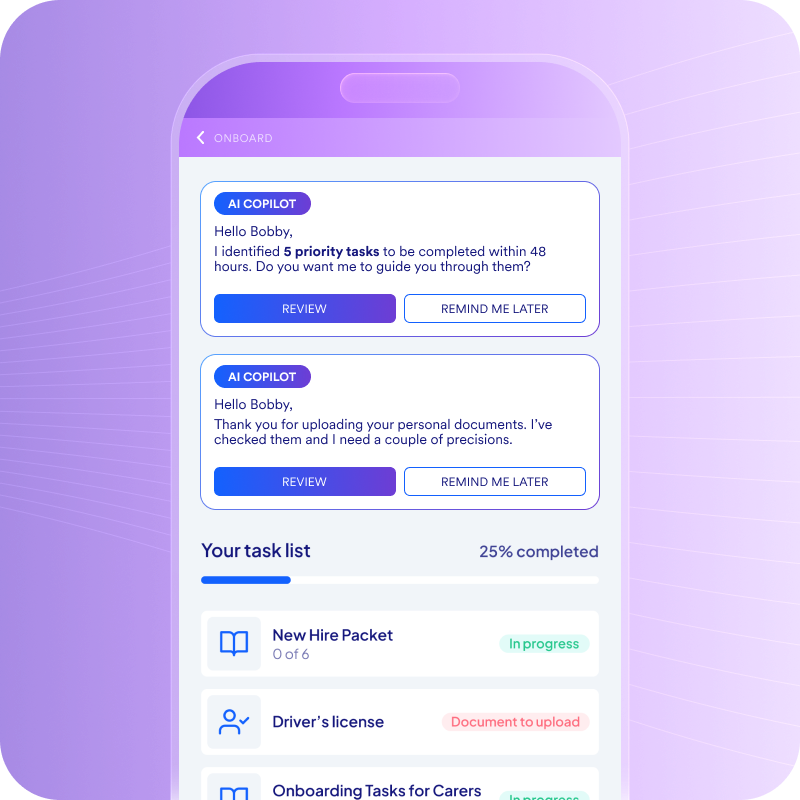
Faster ramp-up. Lower early attrition. AI onboarding built for speed, scale, and retention.
Top employers are already using Fountain’s Frontline OS to:
✅ Reduce turnover in the first 60 days
✅ Eliminate manual paperwork and task delays
✅ Accelerate new hire productivity with smarter workflows
Curious what smarter onboarding could unlock for your team?
All four figures come from the same survey of nearly 2,000 frontline workers.
The seasonal ramp cycle compounds the churn: high-volume hiring each fall, cuts in January, and every returning worker sourced from scratch the next season. Store managers also need enough capacity for coaching and retention conversations. When those get crowded out, quit signals on their teams go unread.
Retention strategies that fit retail operations
Most of this is preventable. Gallup found that 42% of employees who voluntarily left said their manager or organization could have done something to prevent the departure, and the something is usually daily management: workload, scheduling, career, and workplace concerns addressed before notice is given.
- Hire honestly and fast: Name the pay, the shift, and the location in the job post, and run apply-to-offer in days, not weeks. Clear posts cut the expectation gaps that surface in a new hire’s first months.
- Treat the first 90 days as part of the hire: Finish paperwork before day one, give each new hire a named contact, and put the early check-ins on the calendar before the 90-day cliff does its work.
- Give real schedule control: Six-month turnover ran 24% for retail and food-service workers with at least two weeks’ schedule notice versus 39% for those under 72 hours. Advance posting and mobile shift swaps are the highest-leverage scheduling changes for frontline retention, though which one moves a given store varies.
- Make the next role visible: Internal-first postings and published career paths turn growth from a talking point into something a worker can point to.
- Recognize and pay transparently: Recognition programs and compensation benchmarking sit outside hiring systems, and no hiring platform fixes an uncompetitive wage.
Start where your store-level data says the gap is largest, not with the easiest item on the list. If that gap is scheduling, posting the next schedule two weeks out at one store is a pilot you can start this week.
Stay interviews and feedback loops
A stay interview helps a manager spot and act on retention risks before an employee decides to leave; the exit interview arrives after the decision is final. One gives you something to change this month, the other a record for the next hire. For new hires, check-ins at 30, 60, and 90 days fit the 90-day cliff.
After that, regular stay interviews can run twice a year, held separately from performance reviews so employees can speak candidly.
The questions don’t need reinvention. Which parts of your shifts work well for you? Where are you running into friction? What skills or responsibilities would you like to develop? Is anything making you consider another job? What is one realistic change your manager could make?
The interview earns its time only if it closes a loop: a manager captures the signal, changes one thing, and tells the worker what changed, including what will stay the same. Between conversations, automated pulse check-ins can surface quit signals, like the new hire whose day-30 survey score dropped.
The flag is the software’s job; deciding what to do about it is the manager’s. Put a name on every day-30 check-in so a falling score never sits unread.
Where technology and automation fit
Technology reduces candidate loss by shortening applications, screening, offers, and pre-start paperwork. Mobile-first applications let a candidate apply from a phone. Agentic voice screening can qualify candidates 24/7 and help shorten the screening and scheduling delays that stretch the apply-to-offer window, leaving less time for another employer’s offer to land, with managers keeping approval of every hiring decision.
Onboarding automation clears I-9s and tax forms before day one instead of during it. A fair first test: pick one high-volume role and automate its screening and reminder workflow end to end.
Scheduling tools post shifts at least two weeks ahead and let employees swap shifts themselves. Post-hire pulse surveys flag risk inside the 90-day window, while a manager still has time to act.
Automation’s other return is manager time. Every hour it takes off screening and paperwork chasing is an hour a manager can spend coaching and checking in, the work that retains people. Technology shortens the path to a fair schedule and a clean first week. Wages stay a leadership decision.
How to measure and sustain retention gains
Retention improves when it’s scored at the store level. A useful scoreboard reads 90-day retention as a curve (where inside the window do people leave?), tracks day-one show rate, splits turnover into voluntary and involuntary, and cuts all of it by store, shift, and manager. A company-wide rate can hold steady while three stores hemorrhage closers.
Baseline day-one show rate by store for the current cohort first; it’s the number that exposes weak locations fastest.
A 2026 scheduling analysis of 280 million shifts worked by 1.3 million employees across 20 major US retail chains found that no single scheduling practice predicts retention at every store; the drivers vary by location, employee segment, and local labor market. So evaluate scheduling changes store by store rather than mandating them chain-wide.
In practice, that means piloting at one location, measuring for a quarter, then expanding what works. Job-post rewrites and pre-day-one paperwork land in weeks and show up in the next cohort’s 90-day curve. Manager coaching and career pathing compound over quarters.
Put both on the plan and score them on different clocks.
How Fountain helps retail teams keep the people they hire
Fountain is the Frontline Superintelligence for the global frontline workforce, built to run retail hiring from sourcing through the 90-day check-in. Any post-hire check-in process has to reach every new hire at fixed intervals, route each flag to the manager who can act on it, and record what changed.
That is work Cue runs on instruction: a district lead can type “Check in with everyone hired in the past 60 days across stores 12 through 18 and flag anyone showing quit signals” and get back names, check-in statuses, and flags. Managers approve consequential decisions and any exception Cue routes to them.
Cue coordinates three agents, each absorbing work that now costs staff time:
- Sam runs post-hire feedback and check-ins inside the 90-day window, extending the stay-interview cadence above to every store rather than only where a manager finds the time.
- Emma answers candidate questions around the clock and walks new hires through I-9 and W-4 paperwork before day one.
- Anna conducts voice screening interviews 24/7, shortening the path from application to offer.
The platform underneath maps to the sections above:
- Sourcing runs campaigns across job boards, SMS, and paid channels
- The ATS carries honest, fast hiring with mobile-first applications and automated screening
- Onboarding clears paperwork before day one and tracks readiness by location
- Shift & Scheduling posts schedules ahead and handles swaps
- CRM re-engages former seasonal workers before recruiters source new candidates from scratch.
With Fountain, Stitch Fix saw the share of applicants who pass background checks and show up on day one rise from 68% to 95% after warehouse hiring moved onto Fountain. The 60% turnover number is not weather. It is the output of a system you can change: one offer timeline, one schedule, one check-in at a time.
If your next cohort deserves a better 90-day curve than your last one, book a demo and see the 60-day check-in prompt, the store-level scoreboard, and day-one readiness running on your own workflows.
Frequently asked questions about employee retention in retail
What is a good employee retention rate for retail?
The most useful benchmark is your own trailing performance against comparable locations and roles, measured store by store, since national averages blend corporate and hourly roles into a number no single location can act on.
How do you calculate retail employee retention rate?
Subtract new hires from end-of-period headcount, divide by starting headcount, and multiply by 100. The arithmetic is the easy part; quarterly, location-level runs are where the formula earns its keep, because annual company-wide rates hide the stores and shifts driving the losses.
Do seasonal workers count in retail turnover?
In federal data, yes. BLS includes seasonal workers in JOLTS separations, counting end-of-season terminations whether or not the workers are expected to return. Inside a company, tag planned seasonal exits separately so January cuts don’t distort the core number.