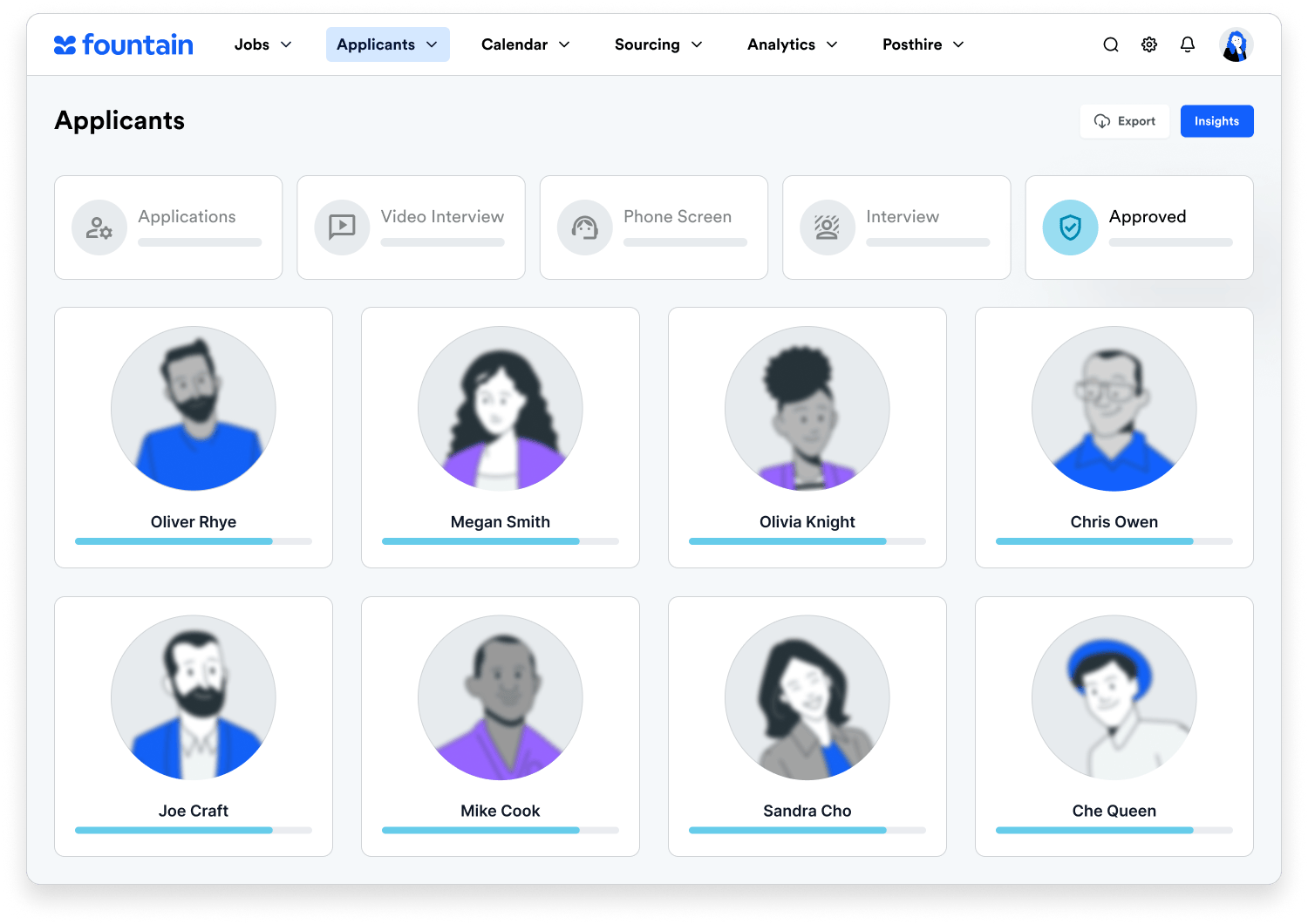

In this post, we’ll reveal 11 high volume recruitment process steps to get your frontline hiring strategy on track.
What is high volume recruitment?
High volume recruitment refers to choosing from a large pool of applicants to fill one or many type(s) of hourly role(s). Often, high volume recruiting can happen as a continual process. This is different from corporate hiring where candidates apply for salaried positions with more specific qualifications.
Understanding the high volume recruitment process
The high volume recruitment process is used to describe the complete cycle of recruitment from beginning to end.
There are different stages of the recruitment process and they are important for hiring quality employees, quickly and at high volume.
Here are high volume recruitment process steps to follow to optimize your hiring practices.
Who is responsible for defining the high volume recruitment process steps?
From recruiters to managers to HR, the high volume recruitment process can involve multiple key players or just one at each stage. Smaller organizations often have just one person filling in many roles.

Outlining the high volume recruitment process steps
1. Assess your hiring requirements
This first of the high volume recruitment process steps involves working closely with hiring managers to find out what requirements are necessary for vacant positions. You will need to compile a list of must-have and nice-to-have qualifications and experience. On this list, include characteristics such as work experience, skills, and education.
After you have defined this requirement of the recruitment process, the recruiter can then create a job description to attract the best candidates.
2. Track the right metrics
Although there are a lot of high volume recruitment metrics to track, you need to focus on the ones that are the most important for your company and have the biggest impact. To continuously improve your high volume recruitment process, determine the metrics you will set and analyze before you start.
Some of the most important recruitment metrics might include:
- Time-to-hire
- Cost-per-hire
- Application completion rate
- Employee retention rate
3. Use smart recruiting tools to improve your process
Smart hiring means using the best tools to improve your recruitment metrics. Irrespective of the size of your business, you should make the best use of modern hiring software to facilitate hiring at scale.
Efficient and modern recruiting tools help you to automate repetitive tasks as well as keep in touch with all of your candidates. The best recruitment tool should also be mobile-first to give candidates a better experience during the entire hiring process.

Essential features of the best recruiting tools include:
- Integration with third-party recruitment vendors
- Advanced analytics
- Interview-scheduling capabilities
4. Define the ideal candidate
In order to write a good job description to attract the right people, you must define a candidate persona to know exactly what you’re looking for. Even though your applicant tracking system (ATS) can automatically filter through applicant information, you still want to make your candidate persona as precise as possible to engage the right candidates.
When creating your candidate persona, use data from previous recruiting drives. Also make sure that the buyer persona is detailed down to the minutiae, so you will know when you receive the right candidate.
5. Write a good job description
After you’ve created your candidate persona, you can start writing job descriptions. Use a template with traits that are similar to your other jobs. This takes the hard work out of building a job description from scratch and can help you get ahead in completing your high volume recruitment process steps.
6. Develop your sourcing strategy
When you know all the characteristics of your ideal candidate and your job description has been tailored to attract them, you now need to figure out the best ways to source them during the recruitment life cycle.
There are many ways to source the ideal candidate—free job boards, paid platforms, employee referral programs, and even social recruiting.
Click here to learn how Fountain uses AI to solve your sourcing needs.
7. Select a shortlist
Once you’ve placed your job listing on the relevant platforms and applications start coming in, you need to have a way to review and screen these applications.

With a frontline workforce management system, you can screen the applications in relation to the different skills and experience that are necessary for each position and decide whether the candidates should move forward to a shortlist or whether they should be rejected from the process.
At this stage, you should have a way to communicate with all your applicants, whether they’re successful or not. Automated communication with all applicants during the entire process can help solve this.
8. Screen candidates more efficiently
After you’ve built your shortlist, it’s time to pre-screen your candidates. Some recruiters use phone interviews before arranging in-person interviews. Other companies may have multiple rounds of interviews or opt for pre-recorded video interviews.
These types of video interviews require you to ask two or three questions and see how they answer. Review these videos to examine their body language, communication, and eye contact.
9. Prepare for one-to-one video interviews
After the screening process is complete, you may choose to arrange face-to-face interviews. These can be quite stressful because candidates get nervous and hiring managers can become overwhelmed, especially if they have a lot of interviews to arrange.
Using interview scheduling software takes the stress out of arranging interviews and also reduces the time this step takes. Candidates who are qualified can get SMS messages and emails with links to your calendar. The time slots will be automatically updated on your and all the relevant managers’ calendars. When a candidate chooses a time, they will get another message confirming the interview, as well as reminders.
Can you automate interview scheduling? Click here to find out.
10. Extend job offers
When the hiring managers have made a decision, the company can make a provisional offer subject to the candidate passing background checks.
11. Onboard new hires
Once the background checks have come out satisfactorily and the candidates have accepted the offer, the last thing you need to do is onboard your new hires. This stage is critical and should not be overlooked as the success of this step can have a direct effect on worker retention.
The benefits of following these high volume recruitment process steps
These high volume recruitment process steps can provide a number of benefits for businesses.
When you have a strategy around the hiring process, the recruiter can exercise more control over how they go about sourcing, recruiting, hiring, and onboarding the right candidates. This enables the recruiter to move quickly since they have a proven system.
Here are some additional benefits of following these high volume recruitment process steps.
Improved accountability
Because there are so many high volume recruitment process steps, it’s possible to lose sight of where candidates are succeeding or may need support. But with a solid frontline recruitment management system, all processes are detailed with owners for each stage, so everyone knows what they are responsible for.
If there is a blockage, team members can assess what changes need to be made to clear it up. In order to determine where the blockages are, the tool that you use should have advanced analytics to show where the recruitment process needs recruiter involvement.
Analytics can offer insights into different aspects of the recruitment process, such as:
- Applicant conversions
- Interview attendance
- Team performance
- Stage metrics
- Drop-off insights
- Hire rates

Decreased time-to-hire
These high volume recruitment process steps also help reduce one of the most important metrics in the recruitment process, which is time-to-hire (or time-to-fill).
By following these steps, your hiring team can reach more qualified applicants. This helps ensure the right people apply and increases your chances of hiring the right candidate the first time around without having to spend extra resources on another round of sourcing.
Improved candidate experience
Candidates are searching for the best experience to determine whether they should continue with their application. Your branding extends to how you handle the recruiting process. Ideally, you should communicate with candidates at all and any stages to ensure that each candidate is well-informed of their status and has all the necessary information.
Improved recruiting and business outcomes
In addition to improving the candidate experience, following these high volume recruitment process steps helps decrease the time-to-fill and delivers higher quality hires. This means your company will not only have better metrics around recruiting, but will also experience improved productivity and improved staff morale.
Improved quality of hire
As well as hiring quickly, you also need to recruit the best candidates. Finding the right candidates will ensure they fit in with the team and are less likely to leave the job shortly after they’re hired. The more quality hires you make, the more business success you’ll experience.
Build out your high volume recruitment process steps with Fountain
The high volume recruitment process has so many moving parts, so it’s important to note that they can be tweaked to suit your company’s unique recruitment needs. The most important thing is that the process can be molded into a strategy that can benefit any team.